How to set up a drop zone for keys, bags, and outgoing items
· Editorial team newswithjameschicago.com
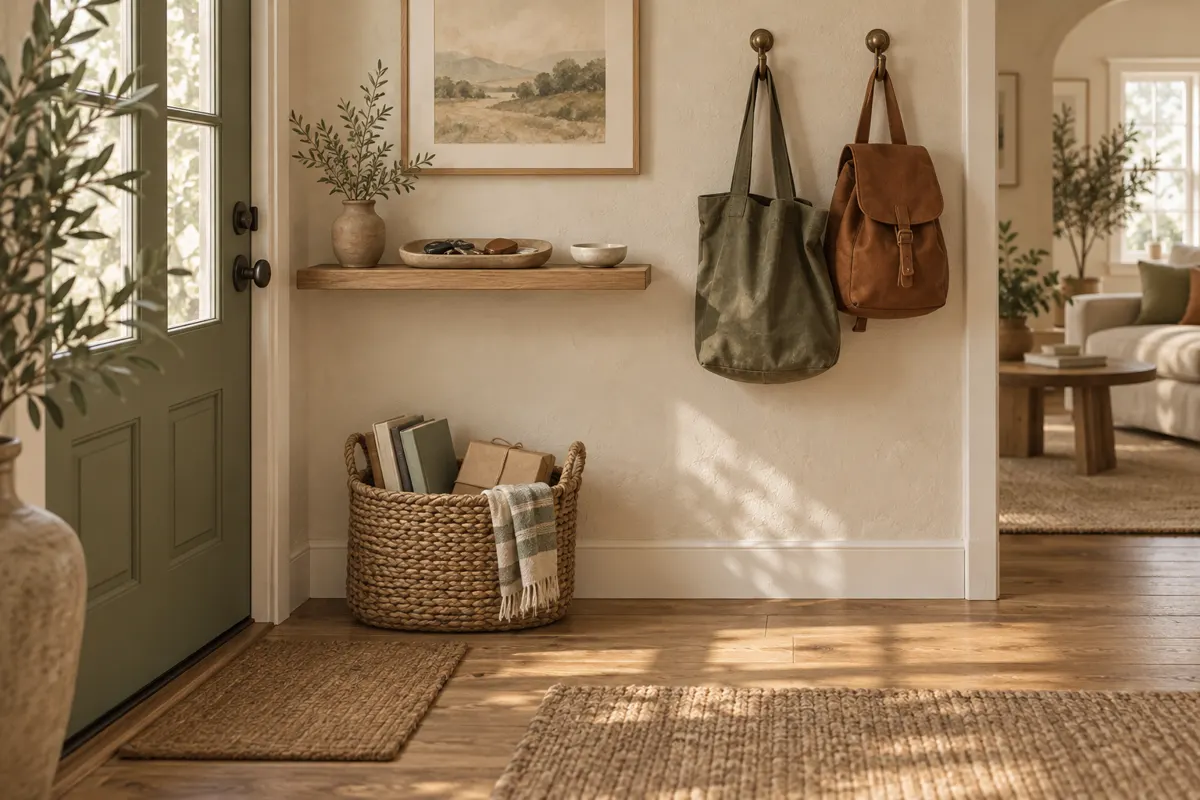
Set up a drop zone near the door you use most: give keys a small tray, bags a hook or cubby, and items that need to leave the house a separate basket. Keep each spot easy to reach and clear it during a quick evening reset. You can start with containers you already own; the important part is giving each item a predictable place.
Choose a spot that fits your arrival routine
Start where you actually put things down when you come home. That might be beside the front door, near a side entrance, or just inside the room adjoining a narrow hallway. A station across the house adds another stop before you can unload your hands.
Our proposed starting setup is one small surface, one bag space per regular user, and one outgoing container. A console can hold the containers if you have room. A shallow shelf is another option for a small entryway. Before adding anything, check that the door opens fully and that bags and baskets leave the walking route clear.
- Everyday essentials: keys, wallet, sunglasses, and the bag you regularly carry.
- Outgoing items: a return parcel, library books, or something you have agreed to take somewhere.
- Items stored elsewhere: spare bags, old paperwork, and things you rarely use.
Give keys and small essentials a fixed home
Use a shallow tray, bowl, or small basket for the objects that otherwise disappear into pockets or spread across a tabletop. Choose something that lets you see and retrieve its contents easily. If two people use the station, separate trays can make ownership clear without requiring a complicated sorting system.
Make returning keys part of coming through the door. Put them in their spot before opening mail or moving into another room. If you prefer hanging keys, our proposed alternative is a dedicated hook beside the small-item tray. Keep the arrangement simple enough to use while carrying groceries.
Avoid letting the tray become general storage. Receipts, loose change, and miscellaneous cords can hide the essentials you need. When an unrelated object lands there, move it to its proper home during the evening reset.
Make bags easy to put away and retrieve
Give each everyday bag a hook, cubby, or defined shelf space. Hooks can work well for purses and backpacks; a cubby is an option when a bag does not hang comfortably. Place children's storage within their reach so they can put away their own belongings.
- Choose hooks and fixings suitable for the loaded bag and the mounting surface, following the product instructions.
- Leave enough space to remove one bag without moving another.
- Keep straps off the floor and away from the door's swing.
- Store occasional totes and spare backpacks elsewhere so the daily spaces remain available.
Separate outgoing items from everyday belongings
Our proposal is a dedicated outgoing basket or a clearly defined section of the shelf. Its purpose is different from the key tray: it holds things waiting for their next trip. Keeping those items together gives you one place to check before leaving.
- Finish the necessary preparation, such as packing a parcel or gathering all the books being returned.
- Add a short destination note if another household member may take it.
- Place it in the outgoing container, with anything needed for the errand alongside it.
- For an item too large to fit, leave a reminder in the container and keep the object somewhere that does not obstruct the entrance.
Keep incoming mail separate. Papers that need a decision are not ready to leave the house. Use a small mail holder if needed, and move filing or longer tasks to another workspace.
Reset the station each evening
A brief daily reset keeps the drop zone usable. Attach it to an existing evening habit, such as preparing your bag for tomorrow. The source suggests returning keys, sorting mail, and hanging bags as part of a short entryway reset; the following is our proposed version for this setup.
- Return keys and small essentials to their assigned spots.
- Hang or shelve everyday bags.
- Remove rubbish and objects that belong in other rooms.
- Check outgoing items against tomorrow's plans.
- Put anything you need to take beside or inside your bag.
If the same item repeatedly ends up outside its spot, adjust the arrangement. A hook may be awkward to reach, a basket may be too full, or a bag may need more space. Change that specific problem before adding more storage.